
Calendar Drift
Forcing Organization into the Solar System

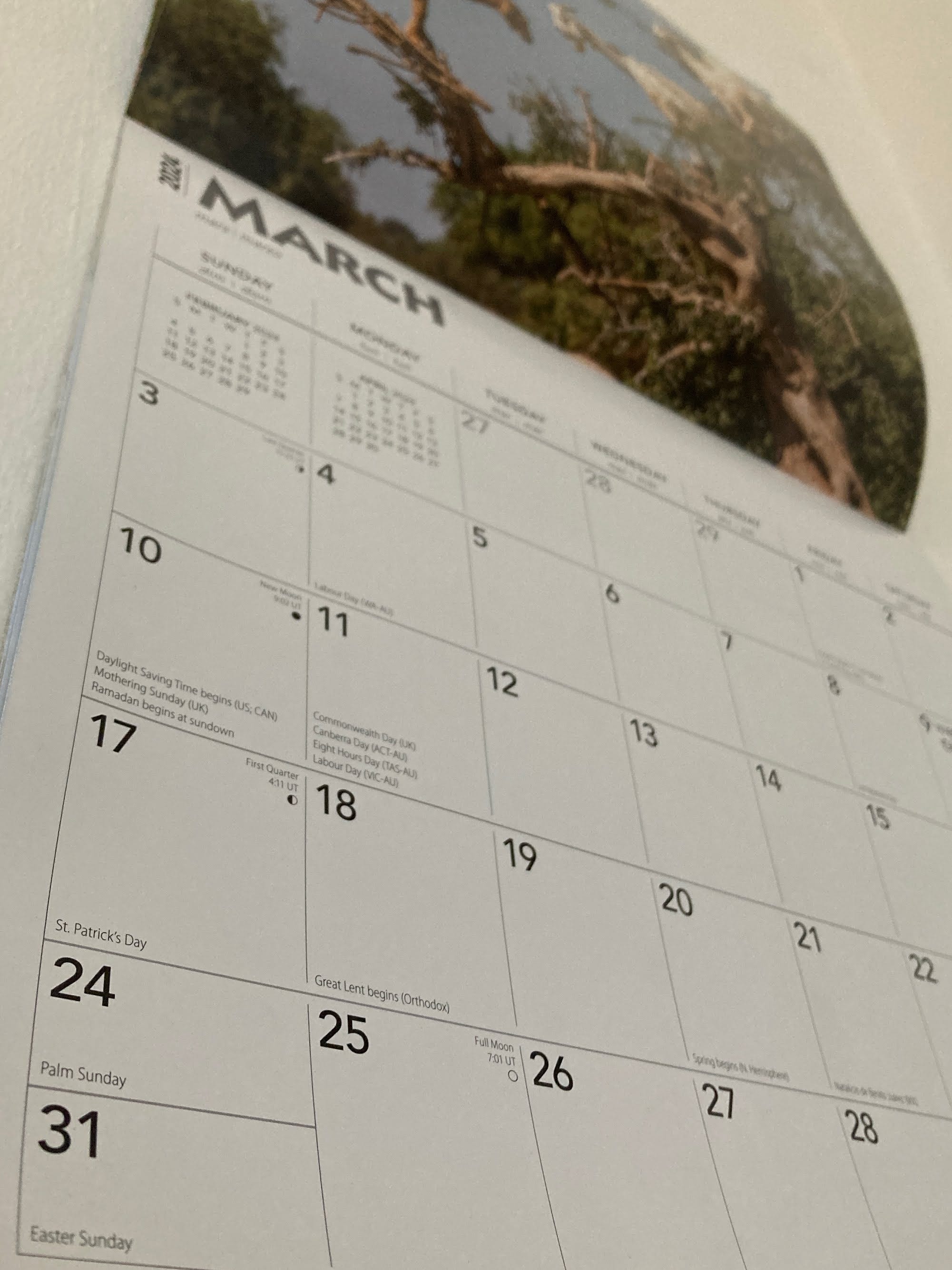
Maybe this is a reflection on the education system, but until recently I had no idea calendar drift was a thing. I first learned about it in Neil Degrasse Tyson’s Star Talk podcast and then dove headfirst down a Wikipedia rabbit hole. It’s why we have leap years and why our seasons and holidays occur during the same time of year.
Basically, calendar drift occurs because our orbit of the Sun isn’t perfectly timed with our 365-day earthly calendar. Specifically, the earth orbit is 365.2425 days long. This means we cut off almost 6 hours from every year. Every 4 years those extra hours add up to 24, and we have a leap year to add the missed time. Even then, it’s not exactly 6-hours, so there’s even more shifting that must be done. I know what you’re thinking, this should have been written on Leap Day this year. Well, I missed it, because my personal calendar drifted.
There are tons of different calendars in the world. It’s a form of organizing periods of time with cultural importance to the timing of celestial bodies. Meaning the calendar changes depending on who you’re talking to. Julius Caesar developed the Julian Calendar with 365.25-days so that the Catholic Churches calculation of Easter matched the required phases of the moon. Centuries later, people realized it wasn’t so clean cut. Thus began the reformation of the Julian Calendar into the Gregorian Calendar, which is commonly used today. At the time the Gregorian reform was accepted, there had been 10 days of drift added over the period of several centuries. So, any country that adopted the Gregorian Calendar shifted their calendar forward 10 days. This made it easier for Easter’s date to be calculated and, as a byproduct, our seasons occur at the same time every year. Due to the widely accepted use of the Gregorian Calendar, many countries use it for fiscal planning, while relying on other calendars for cultural events.
The whole idea of Calendar Drift is wild to me because it seems so arbitrary. Humans determined certain days are so important that a bunch of rules are required to force our calendar into balance with the natural and well-timed orbit of celestial bodies. But it does help me stay punctual… most of the time.
Per usual, this is a pretty simplistic breakdown of a complicated idea. Check out the links and dive in for yourself!
This article dives into why not every 4 years is a leap year.